
Abu Dhabi Photography: Why Production-First Visual Content Defines Premium Commercial Brands

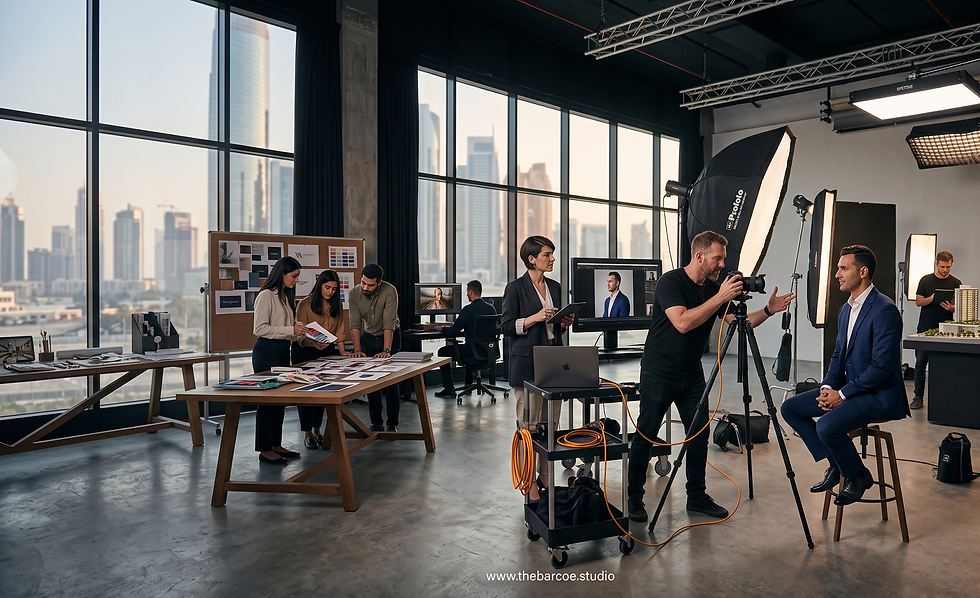
A remarkable image can introduce a brand. A carefully engineered visual production can define how that brand is remembered.
That difference has become increasingly important for businesses investing in Abu Dhabi photography. Corporate leaders, luxury developers, industrial organizations, and premium service providers are no longer searching for photography alone. They are looking for visual partners capable of translating complex brand narratives into compelling commercial assets that perform consistently across websites, campaigns, presentations, annual reports, social platforms, and advertising.
Photography has evolved into a strategic business function where creative vision meets technical precision.
The Quick Answer: What Should Businesses Look for in Abu Dhabi Photography?
For commercial brands, the best Abu Dhabi photography is built around creative production, cinematic lighting, art direction, and advanced post-production, not simply image capture. A production-first approach delivers consistent visual storytelling, reinforces corporate brand identity, and creates premium imagery suitable for marketing, executive communications, luxury developments, industrial environments, and digital campaigns.
Photography Is No Longer Just Documentation
Commercial photography has shifted dramatically.
Successful brands no longer rely on isolated photographs taken for individual campaigns. They develop an integrated visual language that reflects their identity across every customer touchpoint.
Every executive portrait, architectural image, industrial landscape, and branded environment contributes to the same story.
That level of consistency doesn't happen by chance.
It begins with production.
Why Production-First Photography Creates Better Commercial Assets
The strongest commercial imagery rarely starts behind the camera.
It starts with strategic thinking.
Before lighting equipment is positioned or lenses are selected, experienced creative teams define how the brand should feel, what message each image should communicate, and how every photograph will contribute to broader marketing objectives.
Production planning aligns creative vision with business strategy.
Photography becomes one stage within a much larger process.
Commercial Visual Storytelling Drives Brand Recognition
Businesses communicate with visuals long before conversations begin.
Whether someone visits a corporate website, views a company profile, scrolls through social media, or reads an industry publication, photography often becomes the first interaction with the brand.
Commercial visual storytelling transforms individual photographs into connected brand experiences.
Instead of creating disconnected images, production teams establish visual consistency through composition, lighting, environment, styling, and creative direction.
The result is stronger recognition and greater trust.
Corporate Brand Identity Depends on Visual Consistency
Brand identity extends well beyond logos and typography.
Photography communicates professionalism, culture, expertise, innovation, precision, and credibility without saying a word.
Production-first agencies carefully consider elements such as:
Executive presence
Architectural atmosphere
Color harmony
Lighting consistency
Environmental storytelling
Composition
Brand personality
Editorial quality
Campaign continuity
Each creative decision reinforces how audiences perceive the organization.
Cinematic Lighting Changes Everything
Lighting influences emotion more than most people realize.
Premium commercial productions use cinematic lighting not simply to illuminate subjects but to sculpt dimension, reveal texture, establish mood, and guide visual attention naturally.
Whether photographing executives, industrial facilities, luxury interiors, or commercial environments, lighting shapes the emotional response before viewers consciously process the subject itself.
That creative discipline separates premium production from routine photography.
Industrial Photography Requires Engineering Precision
Industrial environments present unique visual challenges.
Large machinery, expansive production spaces, reflective surfaces, complex infrastructure, and dramatic architectural proportions demand careful planning.
Experienced production teams approach industrial photography with remarkable precision.
They balance scale, perspective, safety awareness, controlled lighting, and storytelling to create imagery that communicates capability rather than complexity.
Every frame should inspire confidence.
Luxury Real Estate Visuals Demand More Than Beautiful Interiors
Luxury properties deserve imagery that communicates atmosphere as much as architecture.
Rather than documenting rooms individually, production-first photographers focus on flow, natural perspective, material textures, lighting transitions, and spatial relationships.
The objective isn't merely to show a building.
It's to communicate the experience of occupying it.
This philosophy produces imagery that resonates with investors, buyers, hospitality brands, and commercial developers alike.
Art Direction Shapes Every Creative Decision
Great commercial photography is rarely accidental.
Every element inside the frame should exist for a reason.
Art direction coordinates wardrobe, furniture, styling, props, camera positioning, environmental balance, visual hierarchy, and narrative consistency so every photograph supports the broader creative concept.
Without thoughtful direction, even technically perfect photography can feel disconnected.
Precision Extends Beyond the Camera
Modern commercial photography continues long after production concludes.
Professional teams refine imagery through photorealistic post-production, ensuring every asset maintains natural realism while achieving visual consistency across campaigns.
This workflow often includes:
Tonal refinement
Color calibration
Exposure balancing
Perspective correction
Texture enhancement
Image consistency
Editorial finishing
The objective is authenticity—not exaggeration.
Acoustic and Visual Calibration Behind Professional Productions
Exceptional productions depend on controlled creative environments.
Studio-grade workflows often incorporate acoustic and visual calibration, allowing creative teams to evaluate imagery with greater consistency throughout production and editing.
Accurate lighting evaluation, calibrated displays, controlled environments, and disciplined production workflows help preserve quality from concept through final delivery.
That attention to detail becomes visible in the finished imagery.
Ultra-High-Resolution Rendering Supports Long-Term Brand Value
Commercial photography frequently serves multiple purposes.
The same production may contribute to:
Corporate websites
Investor presentations
Marketing campaigns
Editorial publications
Executive communications
Advertising
Digital media
Print collateral
Brand documentation
Producing imagery with ultra-high-resolution rendering ensures flexibility across these varied applications while maintaining exceptional visual integrity.
Why the Abu Dhabi Business Landscape Demands Premium Visual Production
Abu Dhabi continues to attract international investment, established corporations, innovative technology firms, luxury hospitality groups, industrial operators, and sophisticated real estate developments.
Competition exists not only through products and services but through perception.
Professional photography becomes a strategic communication tool that demonstrates quality before conversations even begin.
Organizations investing in thoughtful production consistently present stronger, more cohesive brand experiences.
Selecting the Right Commercial Photography Partner
Choosing a creative partner requires looking beyond portfolios.
Businesses should evaluate whether a production team demonstrates:
Strategic creative thinking
Commercial visual storytelling
Strong art direction
Cinematic lighting expertise
Corporate photography experience
Industrial photography capability
Luxury architectural understanding
Advanced post-production workflows
Consistent creative execution
Collaborative production planning
These qualities indicate an integrated production mindset rather than a photography-only approach.
Production Creates Images With Purpose
Photography captures moments.
Production creates meaning.
When strategy, creative direction, technical execution, and post-production operate as one seamless process, organizations gain visual assets capable of supporting their brand for years across multiple platforms.
Businesses seeking a leading Abu Dhabi photography agency for commercial photo production in the UAE increasingly value creative teams that approach every project with the discipline of a production studio rather than the mindset of a conventional photography provider.
Frequently Asked Questions
What makes commercial Abu Dhabi photography different from general photography?
Commercial photography is created to support business objectives, brand communication, marketing campaigns, corporate identity, and visual storytelling. It involves strategic planning, creative direction, controlled production, and refined post-production rather than simple image capture.
Why is a production-first approach valuable?
Production-first workflows establish a consistent creative vision before photography begins. This results in stronger brand alignment, more cohesive campaigns, and imagery that performs effectively across multiple marketing channels.
What industries benefit from premium commercial photography?
Corporate organizations, industrial companies, luxury real estate developers, hospitality brands, architecture firms, technology businesses, healthcare providers, education institutions, and professional service companies all benefit from professionally produced visual content.
How does cinematic lighting improve commercial photography?
Cinematic lighting enhances depth, texture, atmosphere, and emotional impact while directing attention to important visual elements. It helps create polished imagery that reflects premium brand positioning.
Why is post-production important?
Professional post-production ensures visual consistency, accurate color reproduction, balanced tones, refined details, and cohesive imagery across entire campaigns while maintaining a natural appearance.
What should businesses consider when choosing a photography agency?
Look for expertise in commercial visual storytelling, creative production, art direction, corporate branding, lighting design, industrial and architectural photography, and comprehensive post-production capabilities.
Conclusion
The standard for Abu Dhabi photography has expanded well beyond technical image capture. Businesses competing in premium markets require visual content that communicates expertise, confidence, and consistency across every customer interaction.
A production-first methodology combines creative strategy, cinematic lighting, art direction, industrial and architectural understanding, advanced post-production, and meticulous visual refinement to create imagery with lasting business value. Organizations that invest in this integrated approach build stronger brand recognition, elevate corporate perception, and establish a visual identity that remains effective across campaigns, publications, digital platforms, and future marketing initiatives.

Comments